Applied AI Master’s Program at Northeastern: Expertise in AI for Healthcare, Cybersecurity, Enterprise
News > Northeastern’s Master’s in Applied AI
The applications of artificial intelligence are sweeping out across every business and government sector, and Northeastern University’s Master of Professional Studies in Applied AI offers students a way to give themselves a competitive edge in a world increasingly shaped by artificial intelligence tools. Now offered at the Arlington campus, the MPS in Applied AI will provide a combination of practical skills, useful theory, and real-world projects.
John Wilder, assistant teaching professor in the College of Professional Studies, played a key role in developing the MPS in Applied AI. He sees it as a unique opportunity for students coming from a wide range of programming experience to level up their skillsets and career opportunities in a hands-on way that is tailored to their desired industry and career path. Previously a professor of computer science, Wilder champions the professional importance of understanding new technology below the surface.
“If you are a working professional in an AI-adjacent field and need to scale your skills to climb the ladder or want to change the focus on your work, you’re a good candidate for the program,” Wilder said. “You will be prepared to implement and use the most relevant algorithms in your industry, and we keep an eye on what’s coming next.”
Programs for different levels of experience
With two tracks based on experience level, the program is open to students with different professional and academic backgrounds. The core degree program has a 34 semester hour requirement. This track is best for those who come in with some familiarity with programming and statistics.
For people without directly related experience, the Connect program includes an additional bridge section of three courses. This initial section introduces students to the basics of programming with Python and the underlying mathematics that drive machine learning. They will also learn core research skills for the graduate level: how to read academic papers, and how to propose new topics of research.
“Anyone interested in AI and motivated to learn can join and find what they need to succeed in the program,” Wilder said. “Our focus is to prepare students to use AI effectively in their industries.”
Practical AI for professionals, not just software developers
The program is practical and focused on developing students as experts in using artificial intelligence tools. It is distinct from the MS in AI program, which is for computer and data science professionals interested in building machine learning algorithms. The MPS in Applied AI is for those students seeking to leverage the cutting-edge AI tools in their respective fields to stay ahead of the curve.
“What I’m striving for in this program is to lead with end product, and then show students how to make it,” he added. “Here’s the code to take what other people have done, stand on the shoulders of giants, and make use of it for real-world applications. As the course progresses, students peel back the layers of the onion to uncover the algorithms under the surface.”
Specializations for key industries layer with core machine learning foundations
The program offers three concentrations that match the needs of government and industry: conversational AI and chatbots; machine learning for cybersecurity; and AI for 3D imaging.
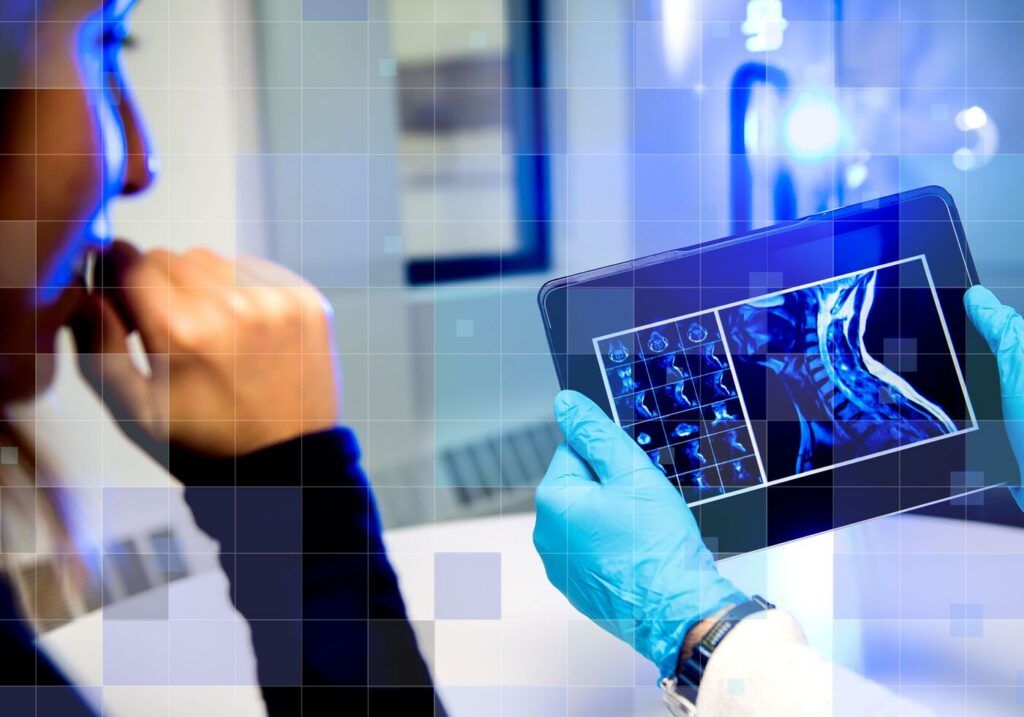
To focus on conversational AI, students will learn how to architect systems that can be deployed in enterprise. The imaging track emphasizes healthcare-related analysis as students use AI to interpret medical images like MRI and CT scans. And the cybersecurity concentration will dig into threat detection, malware classification, network security, and other relevant areas.
In the core courses, all students will dive into the underlying theory and math of the deep learning models powering AI tools. They will gain a foundational understanding of computer vision, natural language processing, and probabilistic learning.
“Concentrations were designed to have a low level of overlap, but all generative AI is based on deep learning models,” Wilder continued. “So, deep learning classes will be relevant for every concentration due to their importance. Our goal is to incorporate as much experiential learning as we can. We give students real-world problems to solve right away, including intro courses using external partners’ real datasets. Those sorts of projects will give students tangible proof for future employers of their capabilities.”
In the National Capital Region, opportunities across sectors
The program is available in Arlington starting this year, with the first cohort enrolling now for Fall 2026. It is also offered in Boston, and at a growing number of other Northeastern campuses. These locations, and the industries of their regions, will shape the types of projects and areas of focus that faculty center in their courses. As the tech hub of the National Capital Region, cybersecurity, health, and new technology are all central to Arlington’s economic and academic sectors.
“Students should consider which campus will give them opportunities for the real-world experiences they want,” Wilder explained. “Our focus is to prepare them for the important problems of whatever industry they choose.”