National security expert Amy Paik bridges nations above and below the oceans
News > Amy Paik
by Benjamin Hosking
In 2018, the undersea fiber-optic cable connecting West Africa to Europe experienced a disruption, causing widespread connectivity failures in West Africa. In 2024, Taiwan, Saudi Arabia, and parts of Europe saw attacks on their cables, further exposing this critical transoceanic infrastructure enabling the interconnected digital world. Although satellites provide some coverage, they only account for 3 percent of global internet traffic.
Undersea cables play an important economic and geopolitical role in the modern world. They route information all over the globe, allowing someone in Namibia to watch a video hosted in Poland, or a bank to complete an international transaction between Singapore and New York City. Sabotage can cause billions of dollars in economic damages, while state intelligence agencies can use submarines to secretly tap the cables and steal sensitive information.
Vulnerabilities in undersea cable systems and international policy
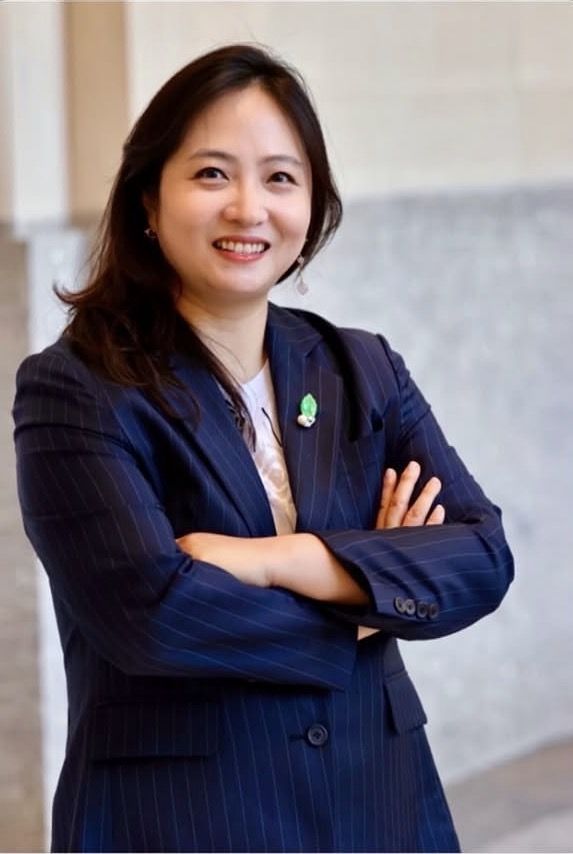
For national security and intelligence professional and Northeastern University in Arlington lecturer Amy Paik, the world of undersea cables has become her field of expertise. Her Johns Hopkins University doctoral dissertation, “Building an International Regulatory Regime in Submarine Cables and Global Marine Communications” explored the creation of international law and norms surrounding cables while emphasizing the role that South Korea, a leading supplier of fiber-optic cables, can play in developing that framework to protect maritime security and cybersecurity.
“When a cable gets cut international waters, the law is not working effectively to protect our privacy,” Paik said. “When sabotage happens, especially to countries reliant on a few cables for communication, the sabotage shuts down the internet for weeks. Saudi Arabia, China, South Korea, the U.S., these countries have many cables. Less privileged countries don’t and can be hit very severely.”
In addition to lecturing in the College of Professional Studies Masters of Arts in National Security and Intelligence, Paik served as an Associate Research Fellow at the Center for Security and Strategy within the Korea Institute for Defense Analyses, where she conducted research on the Korean peninsula, the U.S.-Korea alliance, and the strategic defense implications of technological innovation.
Paik has made policy recommendations in briefings for senior civilian and military officials from South Korea and the United States. In 2024, she received the Wilson International Competition Fellowship at the Wilson Center in Washington, D.C. She has presented and published with the Brookings Institute and the Atlantic Council think tanks.
“The undersea cable issue is a bipartisan and multinational challenge,” she said. “Both Korean and American audiences were interested in my dissertation.”

A career in defense promises challenges, impact
Paik’s first job after graduating from Wellesley College with a bachelor’s degree in political science was with the Seoul-based U.S. Embassy’s Commercial Section. The section is exposed to many areas, including defense, which she learned she could understand even as a civilian. After working for Microsoft Korea, a job opened at a defense think tank. She applied immediately.
“I always wanted to explore unknown areas,” Paik said. “I’ve enjoyed playing a bridge role as a civilian and woman in a veteran and male-dominated world.”
This ambition accelerated during Paik’s undergraduate studies at Wellesley College, in particular through the mentorship of her political science professor Katharine Moon. Paik later worked as her research assistant.
“[Dr. Moon] mentioned that defense is a hard area for women to enter into, but to be truly well-rounded, it’s an area you have to make efforts to know,” Paik said.
“I went to college when [Wellesley alum] Madeleine Albright was secretary of state. We were so happy she got the job and wrote a letter congratulating her. She wrote back, ‘If you want to become secretary of state, go to Wellesley and major in political science. When I hit a block studying, I always thought of that.”
Leading as a practitioner-scholar
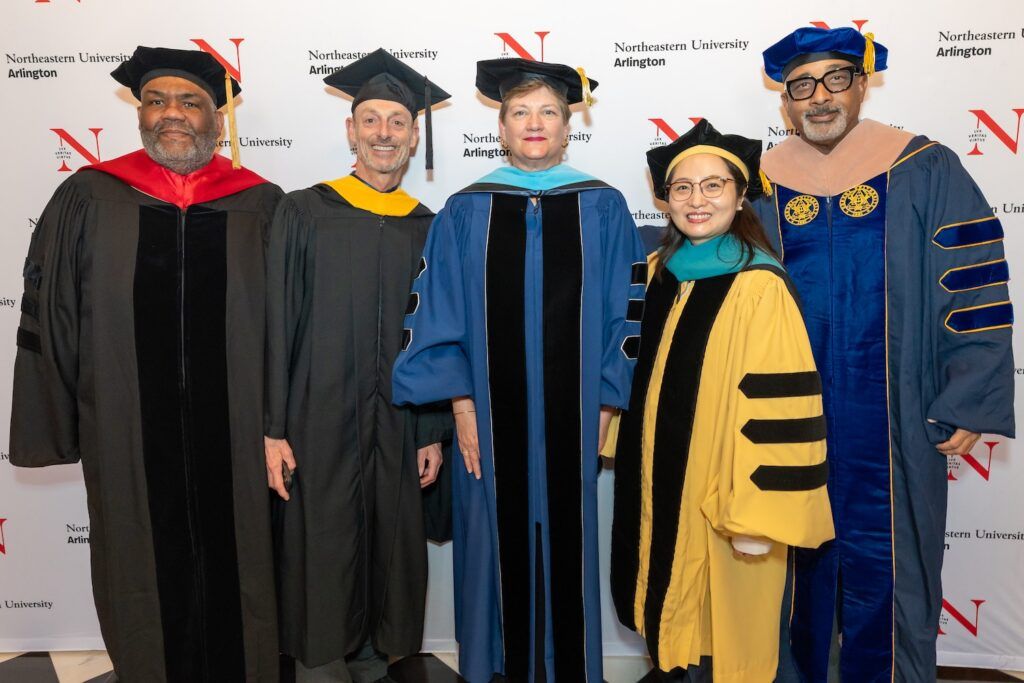
In addition to teaching the courses Civil Liberties & Security, National Security Law & Policy, and Intelligence Operations Management at Northeastern, Paik teaches a capstone course at Johns Hopkins. She sees teaching as a way to pass on to the next generation the torch of her professional and academic mentors.
“[My mentors] would say that becoming an expert in something is not hard,” she said. “Take a new subject and study. I try to challenge my students too, explaining and brainstorming together. I consider myself a practitioner-scholar, and that works well at both colleges.”
Paik sees Northeastern’s program raising great practitioners. Many of her master’s students are already established professionals in medicine and engineering now exploring new areas. She advises her students to take advantage of as many opportunities in the D.C. area as possible and supports their efforts to publish their final class papers in established journals.
“I learned a lot from trying to publish my work,” she said. “I have seen students publish in journals, but also in newspapers and magazines, which gives them more opportunities for their future jobs as policy advisers and policymakers.”
Paik sees her academic and professional careers as mutually beneficial. Research and publishing support her teaching and policy recommendations, thereby making a greater impact on the world.
